The reason why ferrets eat their babies is still a mystery to scientists,
While there are many theories as to why they do this, the truth is no one really knows for sure
Some believe it’s because the mother ferret perceives her young as competition for food or shelter. Others think the mother may be trying to eliminate sick or malformed offspring. And still, most believe it’s a matter of instinct. Whatever the reason, it’s a disturbing sight to see.
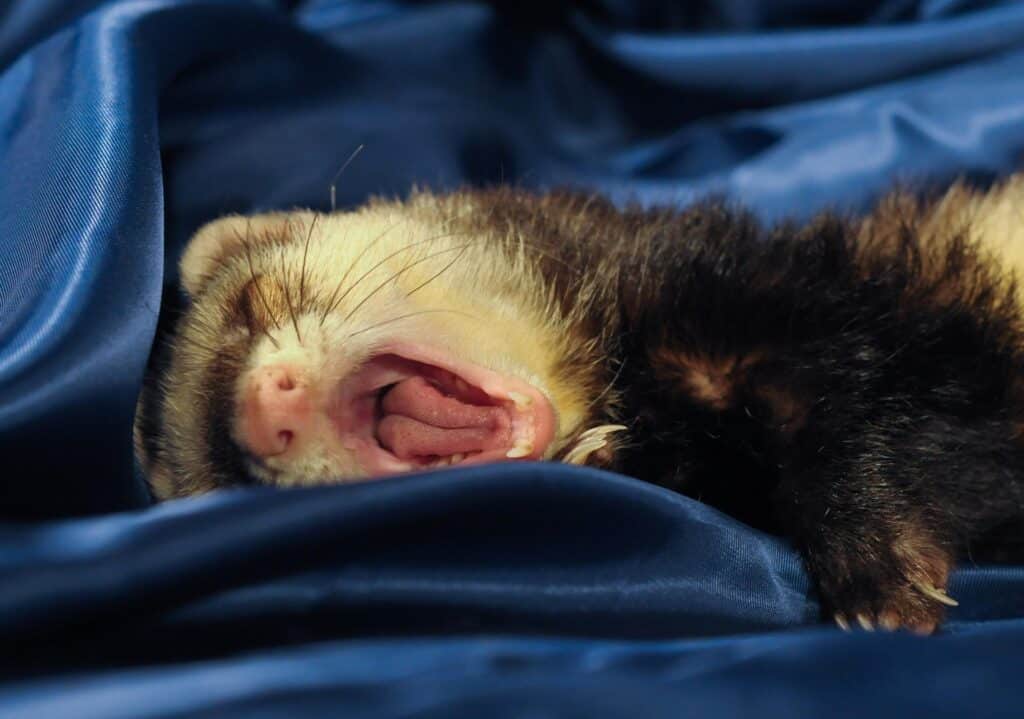
Like many other animals, it seems like ferrets do just the same in terms of eating the young while this is more common on the first litter, there is still no explanation as to why so we will dive into a few common questions and provide you with info so you can learn more and hopefully come to a conclusion.
Do ferrets eat their babies?
- Will Hobs eat ferret kits?
As any pet owner knows, ferrets are playful and lovable creatures. However, it is essential to remember that they are also carnivores. Essentially, this means that they are naturally inclined to hunt and kill other animals. This behaviour helps keep the prey animals’ population in check in the wild. However, in a domestic setting, it can lead to tragedy. Ferrets have been known to kill and eat their own babies. This behaviour is known as infanticide, and it is most often seen in males who have not been able to mate. Therefore, the males will kill the babies to increase their chance of mating with the female still nursing her young. Infanticide is a severe problem, and it is vital to be aware of the risks before adopting a ferret.
- Will Jills eat ferret kits?
Female ferrets typically do not eat their young. However, if they are stressed or if there are problems with the litter, they may eat some of their young. In spite of the fact that its cause is unknown, this seems to happen predominantly in the first litter. This behaviour can be harmful to the litter, as well as to the mother. If you suspect that your ferret is eating her young, it is crucial to seek veterinary care immediately. Veterinary professionals can determine whether there is a problem with the litter and, if necessary, provide treatment to help reduce the stress on the mother. In most cases, however, simply providing a more comfortable environment for the mother and her litter will help to prevent this behaviour.
Is stress a cause of ferrets eating their babies
The stress of parenting can definitely contribute to ferrets eating their babies. When ferrets are stressed, they may become agitated and act out by attacking their young. This can be very dangerous for the young ones and can result in them being eaten. Therefore, it is vital to control the ferret’s stress levels to ensure their young’s safety.
Are the babies that are eaten deformed in any way
The most apparent reason that female ferrets eat their babies is deformities. The babies could be deformed in a way where they can’t move, or they’re in so much pain that eating them is the only way to end their suffering. However, there is no evidence to support this claim. There could be other reasons female ferrets eat their babies, but we may never know. It’s possible that the mothers are just trying to protect their young from predators or that they’re feeling threatened and think the only way to protect their babies is to eat them. Whatever the reason, it’s clear that more research needs to be done on this topic.
Do ferret mothers gain nutrition from eating their babies?
Ferret mothers do not gain any nutritional benefits from eating their babies. In fact, it is actually frowned upon in the ferret community to do so, as it causes health problems for the mother and the baby. However, ferrets are typically excellent mothers and will take care of their young until they are old enough to fend for themselves.
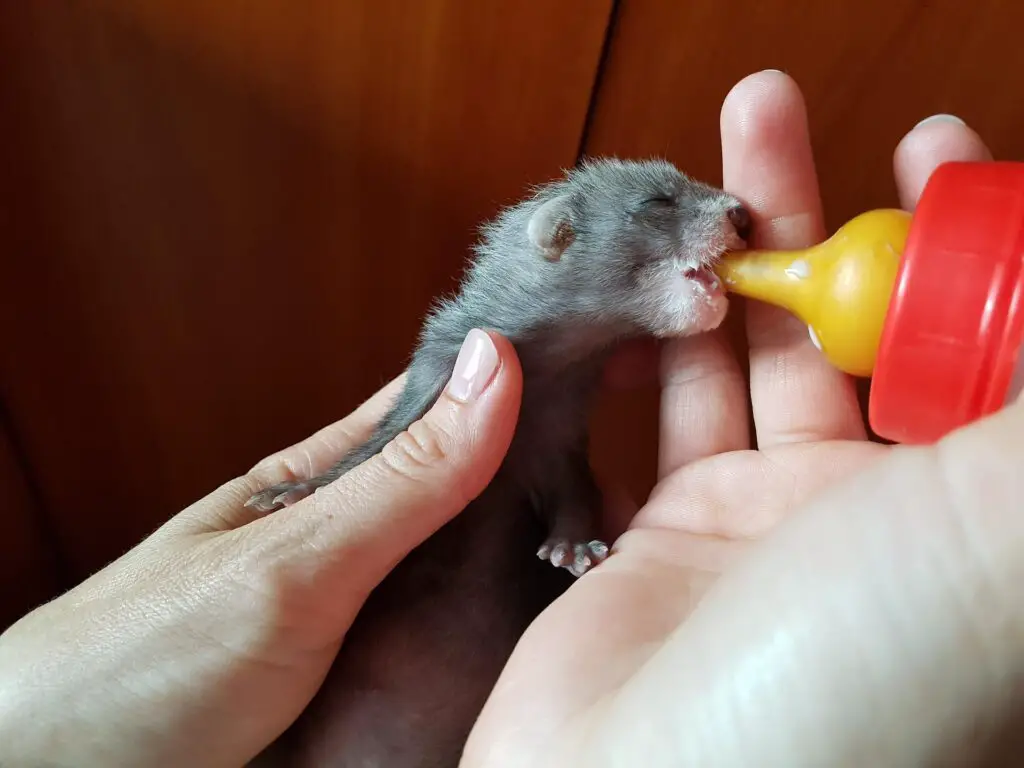
Is the first or last baby ferret eaten?
It’s a little-known fact that female ferrets will often eat their own young, which order is unknown or even why this sometimes occurs again best guess is they are deformed in some way. While the reasons for this behaviour are not fully understood, it is believed that the mothers do this as a show of kindness, putting their babies out of their misery rather than letting them suffer. This is a difficult decision for any mother to make, but it is one that ferrets must face on a regular basis. But, again, with so little known about why or when this behaviour occurs, the best we can do is guess. But one thing is for sure: the mothers are doing what they believe is best for their babies, even if it means making the ultimate sacrifice.
Is the eaten baby stillborn?
It is possible that the baby ferret was stillborn, and that is why the mother ate it. However, a serious issue here needs to be addressed immediately. If the baby ferret was indeed stillborn, then it is vital to find out why. There are many potential causes of stillbirth, including genetic defects, infection, and placental abruption. Once the cause is determined, steps can be taken to prevent future stillbirths. In the meantime, providing supportive care for the mother ferret is essential. This may include supplements to help her recover from the birthing process and close monitoring to ensure that she does not become ill from eating her own young.
How many babies do ferrets have at a time?
As any ferret owner knows, these small, furry creatures can reproduce at an alarming rate. A female ferret can have up to 12 babies at a time, and if she isn’t neutered, she will go into heat every three months. As a result, it’s essential to be careful when letting your ferret out of her cage. In addition, you should make sure that if you have other pets in the house, make sure they are kept away from the ferret; otherwise, you may end up with a litter of unwanted kittens or puppies. Ferrets are also notorious for getting into places they’re not supposed to – like under the couch or behind the fridge. In other words, if you’re not careful, you may end up with a family of ferrets running loose in your home. Regular vet check-ups and spaying is the best way to prevent this from happening.

While it is not common for ferrets to eat their young, it can happen under certain circumstances. If the mother feels that her babies are in danger or if she is stressed out, she may choose to eat them in order to protect them. It’s important to remember that this behaviour is not normal, and you should take your ferret for veterinary treatment if you notice any evidence that your ferret is engaging in cannibalism. By providing a safe and comfortable environment for your ferrets and keeping up with regular vet check-ups, you can help reduce the chances of this happening.