Ferrets and guinea pigs make great pets for different reasons. There seems to be a debate among animal lovers as to which pet is easier to take care of: ferrets or guinea pigs. Some people swear by the ease of caring for ferrets, while others find guinea pigs a breeze. So, which one is really easier? Let’s take a closer look.
Both animals are unique, but guinea pigs are generally easier to take care of than ferrets. Ferrets are more active than guinea pigs and require more exercise. They also need a higher protein diet. Guinea pigs are less demanding when it comes to exercise, diet and daily care.

When it comes to exercise, guinea pigs only need a small space to run around in. A ferret needs a larger area to roam and explore. They also need some type of enrichment, such as toys or a cat tree, to keep them occupied.
Which diet is easier to keep up to between a guinea pig and a ferret?
Deciding what to feed your pet can be a difficult decision. There are countless options available today, which can make it difficult to choose the right one for your pet. In considering the diet of a guinea pig or ferret, a number of things need to be taken into account. A high-fiber diet is necessary for guinea pigs in order to maintain their digestive health. This means that hay should make up the majority of their diet, with fresh vegetables making up the rest. In contrast, ferrets require a diet that is high in protein in order to support their high energy levels. This means that they will need a diet that consists mostly of meat, with some well-balanced kibble. When it comes to ease of feeding, guinea pigs may be the better option as their diet is fairly easy to maintain. You can even try growing their food which makes it a lot more affordable. However, ferrets require more attention when it comes to feeding, as their diet is not as easily available. Overall, it is important to do your research before deciding on a pet so that you can be sure you are able to provide them with the care they need.
What are the differences between ferrets and guinea pigs?
Ferrets and guinea pigs make great pets for different reasons. There seems to be a debate among animal lovers as to which pet is easier to take care of. Different people will be interested in these two pets for different reasons.
Here’s a list of some key differences and facts between Ferrets and Guinea Pigs:
List of facts about guinea pigs:
- Guinea pigs are rodents
- Since guinea pigs are very social animals, keeping them alone is not recommended
- Guinea pigs should have a diet that consists mostly of hay, fresh vegetables, and water
- Guinea pigs can live for 5-7 years
- Guinea pigs come from South America
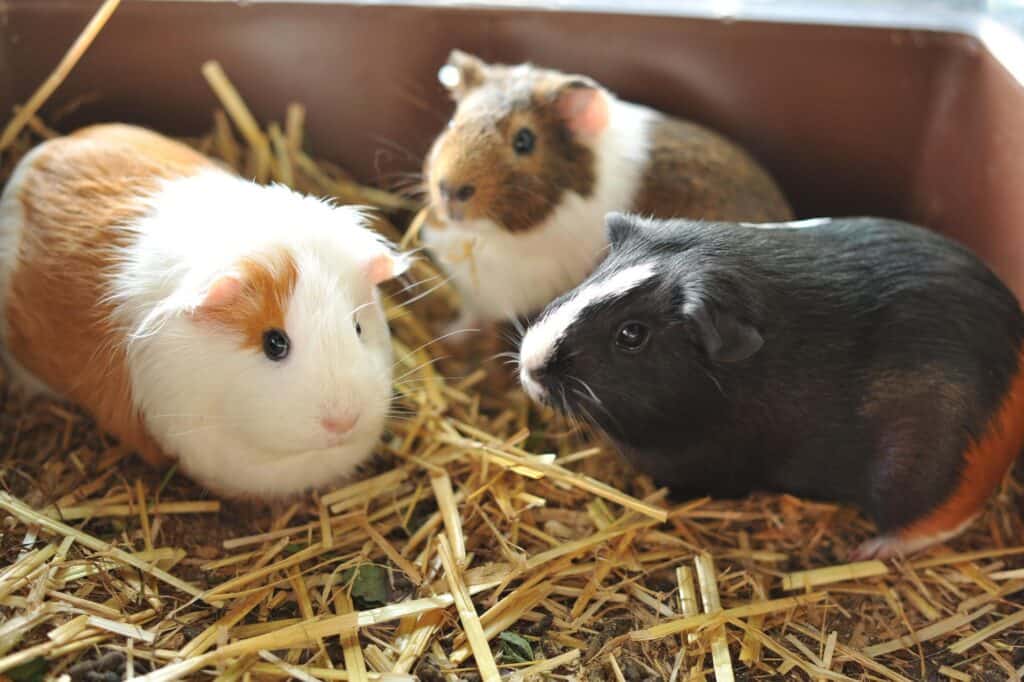
- Guinea pigs can be in various colours, including white, brown, black, and red
- Guinea pigs make great pets for children and adults alike
List for how to maintain a guinea pig:
- A guinea pig should have a cage that is at least seven square feet.
- Wire mesh, plastic, or wood cages should be made of safe materials.
- In order to keep the cage in good condition, it should be kept in a place that is free from drafts and extreme temperatures.
- Cleaning the cage regularly is important.
- A guinea pig should have access to hay, fresh vegetables, and water at all times.
- A guinea pig should be handled gently and with care.
- A guinea pig should see a veterinarian at least once a year.
List of facts about Ferrets:
- The ferret is a small, carnivorous mammal in the Mustelidae family.
- Fur typically varies in color from brown to black to white to mixed.
- A ferret’s average length is 51 cm (20 in), including the tail, and it weighs between 1.5 and 4 kg (3.3-8.8 lb) with a life expectancy of 7 to 10 years.
- Female ferrets are significantly larger than male ferrets, which are sexually dimorphic predators.
- Several other mustelids also have the word ferret in their common names, including an endangered species, the black-footed ferret.
- Ferrets are known to be descent animals and have been domesticated for over 500 years.
- In the wild, they typically live underground in burrows or dens.
- Unlike their polecat ancestors, which are solitary animals, most ferrets will live happily in social groups of same-age individuals. 9
- Ferrets are active predators with a typical lifespan of 7 to 10 years in the wild but often only about one year in the wild due to predation from owls, eagles, and hawks.
- They possess excellent hearing and smell skills, and their teeth are sharp enough to kill rabbits, rodents, and birds.
List for how to maintain a Ferret’s:
- Diet: A diet for a ferret must be high in protein and fat content as well as low in fibre. Ferrets need a diet containing 30% protein and 20% fat.
- Housing: Ferrets should have a large cage that is at least 3 feet by 2 feet by 2 feet. There should be a solid bottom and wire sides on the cage.
- Exercise: Ferrets need to have ample opportunity to run and play. A ferret-proofed room or exercise pen is ideal.
- Training: Ferrets can be trained to use a litter box, but it may take some time and patience.
- Health: Ferrets are susceptible to several health problems, so it is important to take them to the vet for regular check-ups. Some common health problems include dental disease, diabetes, and adrenal disease.
- Grooming: Ferrets should be brushed regularly to remove any dead hair and prevent mats from forming. Additionally, they should have their nails trimmed regularly.
- Socialization: Ferrets are social animals who need to interact with other ferrets or people daily. Otherwise, they may become bored or depressed.

Which is more costly to maintain between a ferret and a guinea pig?
Owning any pet comes with certain costs, from food and shelter to veterinary care. But some pets are more costly to maintain than others. When it comes to small furry animals, ferrets can be more expensive than guinea pigs. In order to explore, ferrets need a lot of space, so they generally require a larger cage than guinea pigs. Spaying and neutering is also necessary, which can add to the initial cost of purchasing a ferret. In addition, ferrets require special diets and are susceptible to health problems, which can drive up veterinary bills. While guinea pigs have many of the same needs as ferrets, they are generally less expensive to care for. So when considering which pet is right for you, be sure to factor in the potential costs of ownership.